Last updated: July 2026
If you are pricing a culvert, drainage line or irrigation crossing anywhere in Karnataka, the first question is always the same: what is the RCC pipe price today? The honest answer is that there is no single fixed rate. An RCC hume pipe is essentially cement, reinforcement steel, aggregates and labour, spun into shape and cured — so its price rises and falls with cement and steel rates, and changes further with diameter, load class (NP2 or NP3), order quantity and how far the pipe has to travel to your site.
This guide gives you realistic 2026 indicative price ranges for the Karnataka and South India market, explains each cost factor one by one, and tells you exactly what information to keep ready so a manufacturer can give you a firm quote in minutes. BKN Group of Industries has been manufacturing RCC spun pipes as per IS 458 standards at Kunigal since 1998, with a second unit at Tiptur, so the ranges below reflect what contractors and gram panchayat engineers in this region actually pay.
Indicative RCC Hume Pipe Prices — Karnataka, 2026
The table below shows indicative market price ranges per pipe of 2.5 m effective length, ex-factory, for reinforced non-pressure pipes made as per IS 458:2021. NP2 is the light-duty class and NP3 the medium-duty class.
| Pipe Diameter | NP2 Class (₹ per 2.5 m pipe) | NP3 Class (₹ per 2.5 m pipe) |
|---|---|---|
| 300 mm | ₹1,100 – ₹1,700 | ₹1,500 – ₹2,500 |
| 450 mm | ₹1,400 – ₹2,400 | ₹2,400 – ₹3,300 |
| 600 mm | ₹2,400 – ₹3,800 | ₹3,800 – ₹5,200 |
| 900 mm | ₹5,000 – ₹7,500 | ₹6,500 – ₹9,500 |
| 1200 mm | ₹9,500 – ₹14,000 | ₹10,000 – ₹15,000 |
| 1600 mm | Enquire | ₹20,000 – ₹28,000 |
Two quick observations from the table. First, price roughly doubles every time the diameter increases by about 50% — a 600mm RCC pipe price is not double a 300mm pipe, it is closer to 2.2–2.5 times, because concrete volume and steel grow faster than diameter. Second, South Indian ex-factory quotes (Bengaluru, Tumkur, Mysuru belt) generally sit in the lower-to-middle part of each range, which works in your favour when you buy locally.
What Drives RCC Pipe Prices? Each Factor Explained
1. Cement and steel — the biggest inputs
Cement and reinforcement steel together account for the majority of a pipe's manufacturing cost. When cement rates jump ₹30–40 a bag or steel moves a few rupees per kg, every pipe class and diameter is repriced. This is the single biggest reason no honest manufacturer publishes a "fixed" price list — and why every price on this page carries the indicative label.
2. Diameter
A larger diameter means more concrete, more steel cage, heavier moulds and slower handling. Cost grows non-linearly: stepping up from 600mm to 900mm roughly doubles the price, not adds 50%. BKN manufactures RCC spun pipes from 300mm up to 1600mm at Kunigal and up to 1200mm at Tiptur, in NP2 and NP3 classes.
3. Load class (NP2 vs NP3)
Under IS 458:2021, NP2 is the light-duty reinforced non-pressure class and NP3 the medium-duty class. NP3 carries a thicker wall and heavier reinforcement (exact wall thickness and steel as per IS 458 tables — detailed spec sheet available on request), so it costs more. More on this below.
4. Order quantity
A single culvert needing 6 pipes and a drainage scheme needing 200 pipes will not get the same per-pipe rate. Larger orders let the factory plan continuous casting runs and spread mould and handling costs, so per-piece prices improve with volume. Always mention your full quantity when asking for a quote.
5. Transport and handling
Concrete pipes are heavy and low-value per kg, so haulage distance matters enormously — often 5–15% of the total landed cost, sometimes more for far-off sites. This factor deserves its own section below.
6. GST and extras
GST on RCC pipes is typically 18%, charged over the ex-factory rate. Collars (for collar-jointed pipes), loading at the factory and unloading at site are usually billed separately. When comparing two quotes, always compare like with like: ex-factory versus ex-factory, or landed versus landed.
NP2 vs NP3: How Much More Does NP3 Cost?
From the indicative ranges above, NP3 typically runs about 25–40% dearer than NP2 of the same diameter. For a 600mm pipe that is roughly ₹1,400 extra per 2.5 m length; for 900mm, around ₹1,500–₹2,000 extra.
Is it worth paying? That depends on the load above the pipe, not the budget. NP2 (light-duty) suits drainage, irrigation lines and cross drains under light traffic; NP3 (medium-duty) is the right choice where medium traffic passes over the pipe, and it is generally preferred over NP2 for larger diameters. Choosing NP2 to save money under a road that carries lorries is a false economy — a cracked pipe means excavating the road again. Our detailed NP2 vs NP3 comparison guide walks through the selection logic case by case.
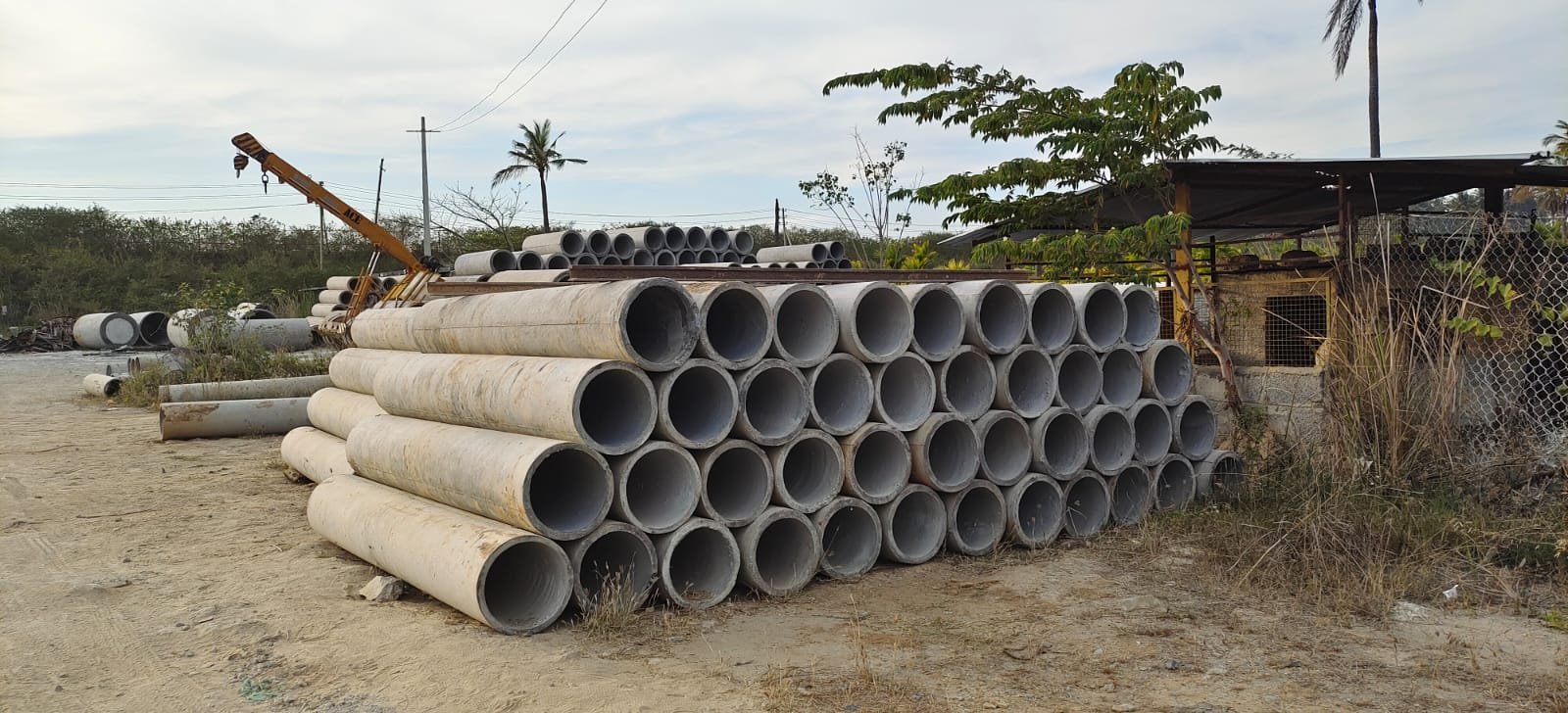
The Transport Cost Reality: Why a Nearby Factory Saves Real Money
Here is the part many buyers discover only at billing time. RCC pipes travel by lorry, priced effectively per kilometre, and a 900mm NP3 pipe weighs a lot of concrete. Haul pipes 250 km across the state and the freight on a full load can add thousands of rupees per pipe — money that buys you no extra strength, no extra life, nothing.
The arithmetic is simple: the cheapest ex-factory price 300 km away is very often more expensive landed at your site than a fair local price 40 km away. Longer hauls also mean more handling, more chances of transit damage, and slower replacement if a pipe arrives cracked.
This is exactly why buying from a nearby manufacturer matters. BKN delivers from two units — Kunigal (main unit, since 1998, 300mm–1600mm) and Tiptur (up to 1200mm) — placing us within a short haul of sites across Tumkur, Hassan, Chikmagalur, Chitradurga and much of Karnataka. For most projects in this belt, our landed cost beats quotes from distant plants even before you compare pipe quality.
How to Get an Accurate Quote (Keep This Ready)
A manufacturer can price your requirement over one phone call if you have five details ready:
- Diameter — internal diameter in mm (e.g., 600mm, 900mm). If the drawing shows only flow requirements, tell us and we will help you size it.
- Class — NP2 or NP3, usually specified in the tender or estimate.
- Quantity — number of pipes, or total running metres (standard effective length is 2.5 m for these sizes).
- Site location — village/taluk and district, so transport can be priced accurately per trip.
- Timeline — when you need delivery, so we can confirm stock or casting schedule.
With these in hand, call 7760337303 or send the details on WhatsApp and you will get a firm rate — ex-factory plus transport to your site — usually the same day.
Why the Cheapest Pipe Is Not Always the Best Buy
RCC pipes look alike from the outside. What separates a pipe that lasts decades from one that fails in a few monsoons is invisible at purchase: the cement content in the mix, the steel cage actually inside the wall, and how long the pipe was cured. An unusually low quote usually means a corner has been cut in one of these — lean mix, undersized reinforcement, or pipes despatched before proper curing.
The risk lands on you, not the supplier. A pipe that cracks under a cross drain means re-excavation, road repair, replacement pipes and a delayed bill — many times the few hundred rupees "saved" per pipe. Before buying purely on price, ask any supplier:
- Is the pipe manufactured as per IS 458:2021 specifications, in the class you specified?
- What is the curing practice and duration?
- Can you visit the yard and inspect pipes before despatch?
At BKN, pipes are spun-cast (centrifugal casting, which compacts the concrete densely) and pass through strict in-house quality control — controlled batching, proper water curing, and dimensional and visual inspection before any pipe leaves the yard. You are welcome to visit either unit and see the process; our guide on how RCC spun pipes are manufactured explains what to look for.
Frequently Asked Questions
What is the 600mm RCC pipe price in Karnataka?
As of 2026, a 600mm × 2.5 m RCC hume pipe indicatively costs ₹2,400–₹3,800 (NP2) or ₹3,800–₹5,200 (NP3), ex-factory, excluding GST and transport. Actual rates depend on current cement and steel prices and your order quantity — call for today's rate.
Do these prices include GST and transport?
No. All figures on this page are ex-factory. GST (typically 18%), collars, loading, transport and unloading are extra. Ask for a landed-cost quote to your site location for a true comparison between suppliers.
How much more does NP3 cost than NP2?
Roughly 25–40% more for the same diameter, because NP3 (medium-duty) has a thicker wall and more reinforcement steel as per IS 458 tables. Pick the class by the traffic load over the pipe, not by price alone.
Why do quotes change from month to month?
Cement and steel are the dominant cost inputs, and both are volatile. Diesel prices also move transport charges. Most manufacturers therefore give quotes with a validity period — treat any published table, including this one, as indicative only.
Need RCC pipes for your project?
Factory-direct prices from our Kunigal & Tiptur units. Serving all of Karnataka since 1998.
📞 7760337303💬 WhatsApp UsRelated Guides
- NP2 vs NP3 Pipes — how to choose the right load class for your culvert or drain.
- IS 458 Standard Explained — what the Indian standard for precast concrete pipes actually specifies.
- Culvert Pipe Selection Guide — sizing and class selection for cross drains and culverts.
- Our RCC Hume Pipes — full range of 300mm–1600mm NP2 & NP3 pipes from BKN.